
 EN


The first fishing law was applied in 1896, founded by the great scientist Grigore Antipa.
In the 60s, the authorities requested the sculptor Corneliu Virgiliu Medrea (1888-1964), plastic artist, corresponding member of the Academy, to create a statuary group to pay tribute to the work of fishermen.
During the 13th century the Great Sea (as it was then called the Black Sea) was dominated by Italian merchants from Genoa who helped develop the city. Constanța subsequently declined under Ottoman rule, becoming a mere village inhabited by Greek fishermen and Tatar horse and sheep breeders.
The first fishing law was applied in 1896, founded by the great scientist Grigore Antipa. This stage is characterized by the modern approach to fishing and fish farming, the protection and rational exploitation of the fish stock, the establishment of research units, the establishment of specialized secondary education – the Giurgiu School of Fisheries and Pisciculture (1928).
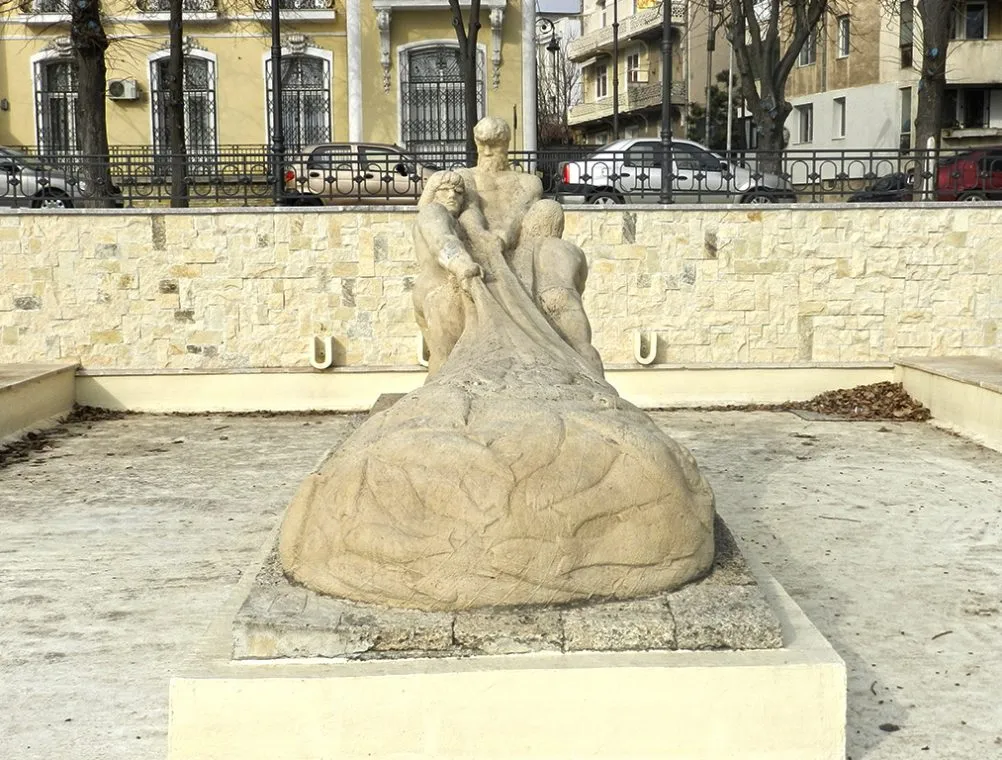
Initially the statue of fishermen with a net was placed on the ground, later a pool was built around it to bring the concept of the statue group closer to reality.
Cornel Medrea practiced all genres of sculpture, cultivating full, robust forms, having the simplicity of reality as his ideal. The portraits, maternity series, historical evocations (Dragoș Vodă and Bison), allegorical representations (Atlas, Fishermen, Victory) converge towards the manifestation of a fullness, an optimism based on the affirmation of the human image.
Here you can find the address of the Fishermen’s Monument in Constanța:
Regina Elisabeta Boulevard, Constanța
Hotel Parc supports the promotion of the city of Constanța and the resort of Mamaia, by offering all the necessary information to tourists and more.
More articles