
 EN


A wedding with guests arriving relaxed, a conference that starts on time or a christening with no travel between locations starts from a seemingly simple decision: hotel room versus external location. In reality, the choice influences the budget, the energy of the guests, the time of the organizing team and the way the whole day will be experienced.
An external location can impress with a special setting, and a hotel room can offer the comfort of an organized experience from start to finish. The right answer is not the same for all events. It matters the type of meeting, the number of participants, the desired program and how much you value simplicity.
Hotel Room vs. Offsite: The Real Difference
The first difference is not just about the room. A hotel room is part of an ecosystem of services: accommodation, restaurant, lounge areas, parking, hospitality staff and sometimes outdoor spaces within walking distance. Instead of coordinating multiple vendors for each moment, you have a central point of contact and an easier-to-follow flow.
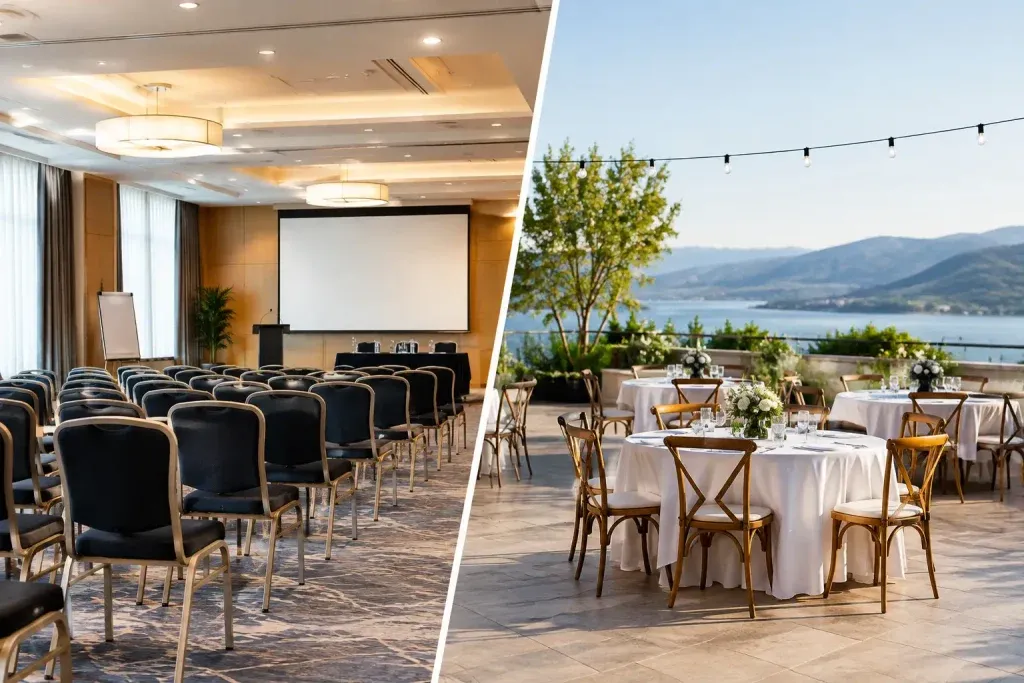
An external location works differently. It can be a villa, an independent restaurant, a garden, a winery or a space with a special concept. This often gives more freedom in choosing suppliers and customizing the decor. On the other hand, freedom brings additional questions: where do the guests stay, who manages the transfers, how is the meal served, what happens if the weather changes, and who remains responsible until the end of the event?
For a one-day event with local guests and a very specific concept, an external location can be the inspired choice. For events with participants coming from other cities, with an extended schedule or with the need for a predictable standard of comfort, the hotel room has a clear advantage.
When is it worth choosing a hotel room?
The biggest benefit is simplified logistics. Participants can stay in the same building or very close to the event space. In the morning, the conference can start without traffic delays, and after a wedding or party, guests don’t have to plan their journey home. For families with children, seniors or groups who have traveled from a distance, this convenience really changes the experience.
In addition, the hotel already has the necessary pace and team to welcome guests. Reception, kitchen, service staff and technical team work in the same place. Therefore, schedule changes, special requests or unforeseen moments are usually easier to manage than in a space that needs to be temporarily adapted for the event.
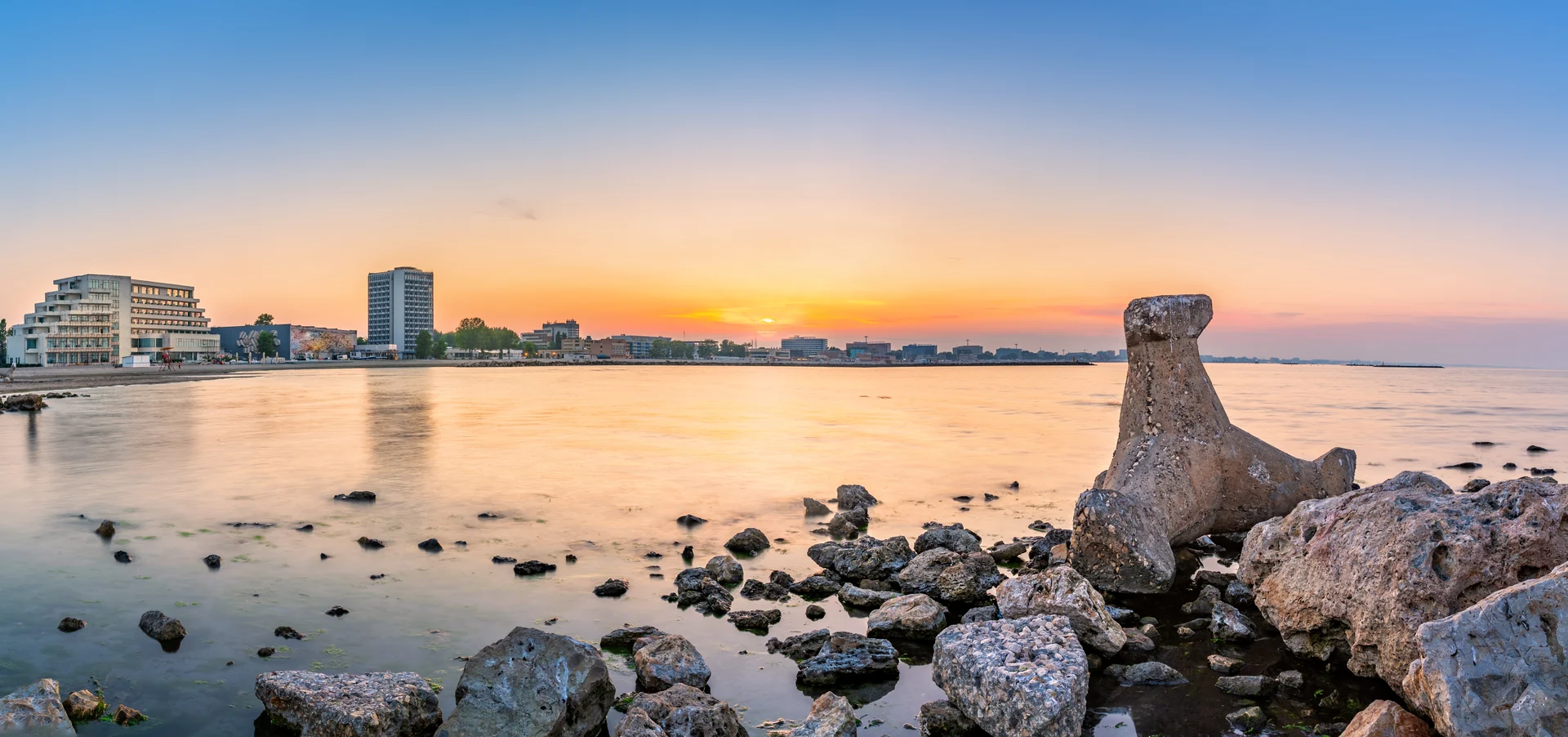
At the seaside, the advantage becomes even more visible. A corporate meeting can continue with a sunset cocktail, and a family party can be completed by a quiet morning on the beach. At Hotel Parc Mamaia, for example, the proximity to the sea, accommodation and dedicated spaces allow the transformation of an event into a memorable stay for guests.
The budget becomes more predictable
The initial price of an external location may seem attractive, especially if the space rental is separate from the rest of the services. However, the final cost is made up of many elements: furniture, crockery, staff, cleaning, sound system, lighting, transport, accommodation and possible fees for extending the program.
In a hotel, packages can bring together an important part of these services. It doesn’t automatically mean that the hotel room is always cheaper, but it can be easier to estimate the actual investment. Ask for a detailed quote and compare the full costs, not just the rental rate. This is the difference between a seemingly good budget and one that stays within the established limits.
Guests receive more than just an invitation
For weddings, christenings, anniversaries or reunions, the guest experience matters as much as the decor. In a hotel room, those who stay overnight can turn the event into a small vacation. A coffee served in the morning, quick access to the beach, the pool or an evening walk change the atmosphere and provide time for conversations that cannot fit into a single party.
This type of experience is especially valuable when you have guests from multiple cities. Instead of sending them a list of recommendations for accommodation and transportation, you give them a simple plan: they arrive, settle in and enjoy the event.
When an external location is the right choice
An outdoor location wins when the space is an essential part of the event’s story. Maybe you want a garden with a certain style, a ceremony in a place with personal meaning or a creative concept that does not fit in a classic hall. If decor, freedom to choose any provider and unconventionality are priorities, it’s worth exploring this option.
It’s also a good option for small, local groups who don’t need accommodation and prefer a concentrated event in a short space. In this case, the extensive infrastructure of a hotel may not be necessary.
However, check your backup plan carefully. For outdoor spaces, weather is not a detail, but an organizing component. Ask where guests move if it rains, if there is air conditioning on very hot days, enough toilets, easy access for people with reduced mobility and adequate parking. A spectacular place in photos must remain comfortable even after several hours of the event.
How do you correctly compare the two options?
Don’t start from the question “which is more beautiful?”, but from “how do we want our guests to feel?”. Then look at four aspects: access, time, costs and atmosphere.
Access means distance to airport, train station, city or accommodation. Time refers to both the duration of the event and the hours spent coordinating suppliers. In costs, include all mandatory and optional services. And the atmosphere must be evaluated according to the audience: a conference needs focus and functionality, while a wedding may need different spaces for the ceremony, dinner, dancing and moments of respiro.
Visit the space at a time close to the event. The light, the noise in the area, the access to the toilets and the temperature in the room feel different than in a daytime presentation. If you are planning an event by the sea, also look at the actual route between the hall, rooms, beach and relaxation areas. A few extra steps may seem small on the map, but they matter to guests after a long day.
Questions that prevent surprises
Before signing the contract, clarify what is included in the offer, how many people the team can serve at once and who the contact person is on the day of the event. Ask about set-up time, children’s policy, menu options, decor restrictions and contingency.
For a hotel room, it is worth checking the availability of guest rooms and the conditions for group bookings. For an external location, ask explicitly about power supply, post-event cleanup, security staff, transportation, and the indoor option. Clear answers are a good sign that the organization will be as careful as the original promise.
The choice that supports the moment, does not complicate it
A hotel room is suitable when you want people to stay close, feel cared for and have everything close at hand. An external location is suitable when the place itself expresses a concept that you do not want to negotiate. Both can host beautiful moments if chosen carefully.
Put first the comfort of the guests and the level of involvement you want in the organization. A successful event is not only measured in spectacular photos, but also in the peaceful way in which everyone arrives, enjoys time together and leaves with pleasant memories.